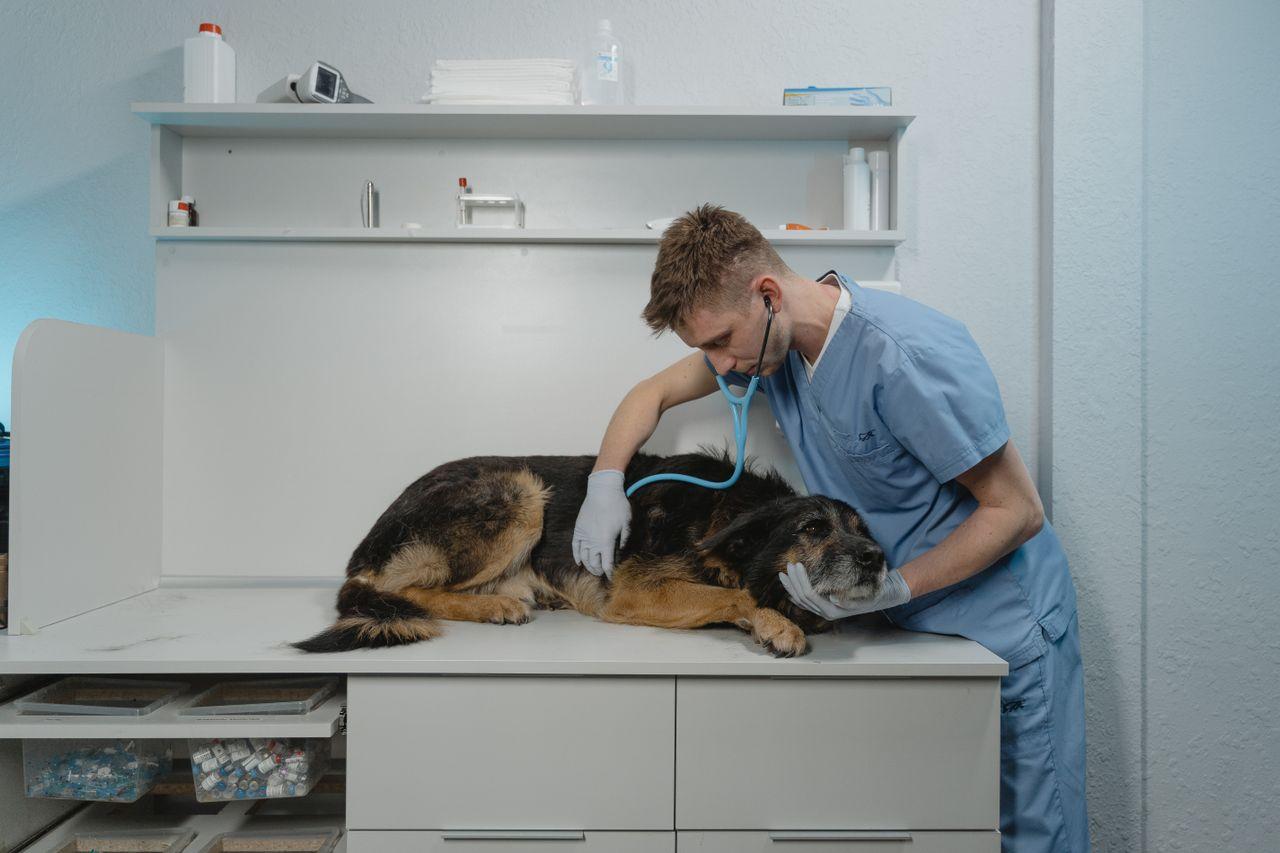
Veterinarians occupy a unique position in the investment landscape. Whether you're an associate building your career or a practice owner planning your exit strategy, real estate offers wealth-building opportunities that align with your professional trajectory. The U.S. veterinary services market is projected to grow at a 7.9% annual rate from 2026 to 2033, supporting demand for veterinary facilities. For veterinary professionals seeking to build a portfolio without the operational burden of property management, fractional real estate investing provides a streamlined entry point with lower upfront capital requirements than buying an entire property and the potential for monthly rental distributions.
Disclaimer: The information provided in this guide is for educational purposes only and does not constitute financial, tax, or legal advice. Always consult with a licensed professional before making any financial or investment decisions.
Key Takeaways
Some specialized lenders offer veterinarians up to 100% financing on practice acquisitions, though availability depends on loan type and underwriting criteria.
Total U.S. pet industry spending reached $158 billion in 2025, reflecting demand for pet products and services.
Separating practice operations from real estate ownership can create different sale and leasing options, with total value dependent on market conditions and transaction terms.
Associate veterinarians pursuing practice buy-ins can use fractional ownership platforms to build real estate exposure while keeping separate liquid funds available for equity purchases.
Veterinary property cap rates vary by tenant, location, and lease terms, while triple-net leases can shift certain operating expenses to tenants.
Understanding Real Estate Investing for Veterinarians
Why Real Estate Aligns With Veterinary Careers
The veterinary profession creates natural advantages for real estate investment. Specialized lenders offer financing tailored to veterinary practices, with terms based on the borrower, business, and property. These options can support practice acquisitions and real estate purchases.
Beyond borrowing power, veterinarians possess operational knowledge of healthcare real estate fundamentals that transfers directly to investment analysis. Understanding patient flow, equipment requirements, and facility regulations provides insight into property valuation that generalist investors lack.
The underlying market fundamentals support a long-term investment thesis:
95 million U.S. households owned pets in 2025, supporting demand for veterinary services
Total U.S. pet industry spending reached $158 billion in 2025, projected to reach $165 billion in 2026
Veterinary care remains an important household expense, although spending can change with consumer budgets
Setting Investment Goals Across Career Stages
Real estate strategies should align with your career trajectory. Associates early in their careers may balance diversified real estate exposure with liquid savings for eventual practice buy-ins. Practice owners approaching transition should evaluate whether practice operations and real estate should be sold together or separately.
The critical question for most veterinarians is capital allocation: Should available funds go toward practice equity, practice building purchase, or diversified real estate investment? The answer depends on timeline, risk tolerance, and operational preferences.
Building a Real Estate Portfolio Without Operational Burden
Strategies for Hands-Off Real Estate Investment
Veterinarians already manage demanding clinical schedules. Adding property management responsibilities creates operational strain that many practitioners want to avoid. Several approaches enable real estate exposure without landlord duties:
Fractional ownership platforms allow investment in professionally managed properties through LLC structures, with the platform handling tenant coordination, maintenance, and operational responsibilities. Investors may receive monthly rental distributions proportional to their ownership stake when distributable net income is available.
Veterinary-focused REITs provide exposure to portfolios of veterinary properties. Some REITs offer UPREIT structures that may allow qualifying property contributions to operating partnerships with potential tax deferral, addressing concentration risk for practice owners.
Triple-net lease investments typically shift property taxes, insurance, and many maintenance costs to tenants. Lease lengths vary, but some veterinary properties use multi-year NNN structures that can provide more predictable contractual rent.
Comparing Real Estate to Other Wealth-Building Options
For veterinarians evaluating where to deploy capital, real estate offers distinct advantages over traditional securities. In mogul's historical analysis, single-family rentals delivered higher modeled returns than the S&P 500 from 1993 to 2023, with lower measured volatility.
Real estate also provides four simultaneous wealth-building mechanisms:
Monthly cash flow from rental income
Appreciation as property values increase
Tax advantages through depreciation deductions
Leverage that amplifies returns on equity invested
Navigating Your First Investment Property
Realistic Pathways to Real Estate Investment
The "no money down" concept that populates online real estate content rarely reflects reality for most investors. However, specialized practice financing and emerging investment vehicles offer additional pathways for veterinarians.
Fractional ownership reduces entry capital requirements significantly compared to full property purchases. Rather than accumulating a $250,000 down payment for a rental property, veterinarians can build diversified exposure through smaller investments across multiple properties.
Practice real estate financing leverages your professional credentials. Some specialized veterinary lenders offer up to 100% financing on practice acquisitions, though availability depends on loan type, property, and underwriting criteria. Terms depend on practice performance, collateral, and the borrower's financial profile.
Phased buy-in structures allow associates to purchase practice equity incrementally, sometimes over several years, with real estate decisions separated or deferred to balance capital needs.
Leveraging Your Professional Position
Specialized practice financing provides options that differ from conventional investment property loans. Key capital allocation considerations include:
Practice real estate financing where favorable terms are available
Capital available for diversified real estate investments
Liquidity reserves for practice opportunities that may arise
Investment Property Analysis: Making Informed Decisions
Key Metrics for Evaluating Rental Property Potential
Successful real estate investment requires rigorous analysis before committing capital. Essential metrics include:
Capitalization rate (cap rate) measures annual net operating income relative to property value. Veterinary property cap rates vary with tenant credit, lease duration, location, and property condition.
Cash-on-cash return calculates annual pre-tax cash flow relative to total cash invested, accounting for leverage effects.
Internal rate of return (IRR) provides a comprehensive measure incorporating both cash flow and appreciation over the investment holding period.
Rent-to-revenue ratio applies specifically to practice real estate decisions. A veterinary practice finance guide suggests rent ideally should not exceed 5% of gross revenue, although individual practice economics vary.
For veterinarians analyzing potential investments, mogul's investment property calculator provides projections on rental income, ROI, IRR, and cash-on-cash yield across multiple scenarios for any U.S. address.
The Role of Data in Investment Decisions
Institutional-quality analysis helps investors assess property prices and expenses. Key data sources include:
Comparable sales analysis for accurate property valuation
Rental market data for realistic income projections
Operating expense benchmarks specific to property type
Local market trends affecting appreciation potential
The Airbnb calculator provides specialized analysis for short-term rental potential using data from millions of listings nationwide, helping investors compare income potential across rental strategies.
Maximizing Returns: Income and Appreciation Strategies
Generating Consistent Rental Income
Rental income potential varies significantly by property type, location, and management approach. Short-term rentals may generate higher gross income but require more active management, while long-term rentals typically provide more predictable cash flow with lower turnover costs.
For veterinarians seeking monthly distributions without operational involvement, fractional platforms provide distributions from available net rental income when properties generate positive cash flow, with professional management handling tenant coordination and maintenance.
Mid-term rentals (30+ day stays) have emerged as a hybrid strategy. mogul reports its mid-term rental strategy has operated at approximately 94% occupancy, offering a balance between income potential and operational simplicity.
The Power of Appreciation and Leverage
Real estate appreciation compounds wealth over time, but leverage amplifies the effect on invested capital. When a $400,000 property purchased with $100,000 down appreciates 5%, the investor gains $20,000 in property value, a 20% increase relative to the down payment before costs and financing.
Properties held for 3-10 years may benefit from both market appreciation and forced appreciation through operational improvements. Strategic renovations, management upgrades, and market repositioning can increase property values independent of broader market movements.
Tax Benefits for Veterinarian Property Owners
Understanding Depreciation and Tax Efficiency
Real estate offers tax advantages that differ from traditional securities. Depreciation is a significant potential tax benefit. LLC structures used in fractional ownership may allow depreciation deductions to pass through to members, subject to individual tax situations, at-risk rules, and passive activity limitations.
For veterinarians in high tax brackets, depreciation can significantly improve after-tax returns when applicable. Depreciation benefits available through LLC structures may provide tax efficiency compared to REIT distributions, though actual tax impact depends on individual circumstances.
Key investment property tax benefits may include:
Depreciation deductions that may offset rental income
Mortgage interest deductions on financed properties
Property tax deductions
Operating expense deductions for management, repairs, and maintenance
Advanced Tax Strategies
1031 exchanges allow owners of directly held real estate to defer capital gains by reinvesting sale proceeds into like-kind property. A qualifying exchange may defer certain gains when the relevant requirements are met. Note that partnership interests, including most fractional LLC interests, generally do not qualify for 1031 treatment under current IRS rules.
UPREIT contributions may allow property owners to contribute real estate to certain REIT operating partnerships with potential tax deferral. These transactions involve operating partnership units rather than immediate exchanges for ordinary REIT shares, and tax treatment depends on specific transaction structure.
Cost segregation studies accelerate depreciation by reclassifying building components, front-loading tax benefits into early ownership years.
Real Estate as Portfolio Diversification
Comparing Returns to Traditional Investments
Veterinarians who concentrate wealth in practice assets face significant concentration risk. Diversification across asset classes can reduce concentration risk while maintaining return potential.
mogul's analysis shows single-family rentals delivered 13.8% annually compared to 9.8% for the S&P 500 from 1993 to 2023, with lower measured volatility. These are historical company-modeled comparisons, not forecasts.
Building a Balanced Investment Approach
For veterinarians, optimal allocation depends on career stage and practice ownership status:
Associates may balance diversified real estate exposure with liquid savings for practice buy-in opportunities
Practice owners may benefit from separating practice operations from real estate ownership to optimize value realization
Retiring owners can convert concentrated practice real estate into diversified income-producing portfolios
Choosing the Right Investment Platform
The Importance of Institutional-Grade Expertise
Not all real estate platforms provide equivalent quality. Key differentiators include:
Track record: Historical returns and property selection accuracy
Diligence process: Rigor of underwriting and property vetting
Management expertise: Operational capability to maximize property performance
Alignment: Whether platform operators invest alongside members
Platforms founded by professionals with institutional real estate backgrounds can bring experience to underwriting and risk evaluation. Look for teams with experience evaluating billions of dollars in transactions, not just marketing experience.
Evaluating Risk Mitigation Features
Real estate investment carries inherent risk. Platforms may offer features that help investors evaluate or manage these risks:
Loss protection programs that may provide conditional benefits to eligible new members, subject to promotional terms
Diversification across properties rather than concentration in single assets
Professional property management that maintains asset quality and tenant relationships
Transparent reporting on property performance and market conditions
Why mogul Stands Out for Veterinary Professionals
mogul was built by Goldman Sachs real estate alumni who collectively have over $10 billion in deal experience. This institutional background informs the platform's property selection and underwriting process.
What distinguishes mogul for veterinarians:
Rigorous property selection means less than 1% of properties reviewed pass mogul's diligence process. Research analysts use proprietary underwriting models developed from institutional real estate investing experience to identify properties with strong return potential.
Alignment through co-investment ensures mogul co-invests in every property offered on the platform. This co-investment structure aligns financial interests in property performance.
Up to $10,000 first-year protection is described by mogul for qualifying new members on investments made during their first seven days, subject to applicable promotion terms and eligibility.
Monthly distributions from available net rental income when properties generate distributable cash flow. Property valuation updates are based on available property data.
LLC ownership structure enables investors to receive pass-through tax reporting and potential depreciation benefits, subject to individual tax situations and IRS limitations.
One-time platform fee: mogul charges a 5% platform fee based on the property purchase price, which is capitalized into the investment.
For veterinarians seeking to build real estate portfolios without operational burden, mogul provides institutional-quality investment access with the convenience and accessibility that busy clinical schedules require.
Disclaimer: The information provided in this guide is for educational purposes only and does not constitute financial, tax, or legal advice. Always consult with a licensed professional before making any financial or investment decisions.
Frequently Asked Questions
How does fractional real estate ownership differ from investing in REITs for veterinarians?
Fractional ownership provides LLC membership interests in specific properties. LLC structures may enable pass-through tax treatment, allowing depreciation and other deductions to flow to members, subject to individual tax situations, at-risk rules, and passive activity limitations. REIT distributions can include ordinary dividends, capital gains, and return of capital, while partnership-taxed LLC members may receive allocations of property-level depreciation. For veterinarians in higher tax brackets, this structural difference can meaningfully impact after-tax returns, though actual benefits depend on individual circumstances. Consult a tax professional to evaluate your specific situation.
What kind of returns can veterinarians expect from fractional real estate by 2027?
Return potential varies significantly by property type, market conditions, and hold period. mogul publishes a 12-20% target IRR range for its investments over typical 3-10 year hold periods, though individual property performance varies and past performance does not guarantee future results. Returns come from both rental income distributions and property appreciation over time. Factors affecting returns include property selection, local market dynamics, financing terms, and operational execution.
Can associate veterinarians invest in real estate while saving for a practice buy-in?
Yes, and fractional ownership can complement practice buy-in planning rather than compete with it. Associates pursuing phased buy-ins, including arrangements that spread equity purchases over several years, can evaluate fractional real estate alongside practice equity while keeping separate liquid funds available for buy-ins. This approach builds real estate exposure during peak earning years without the capital intensity of purchasing practice buildings outright. Depending on outcomes, associates may ultimately hold both practice equity and real estate investments.
What are the primary tax advantages of real estate ownership for high-earning veterinarians?
Depreciation is a significant potential tax benefit. LLC structures used in fractional ownership may allow depreciation deductions to pass through to members, subject to individual tax situations, at-risk rules, and passive activity limitations. These deductions may offset allocated rental income, though they generally do not automatically offset active veterinary practice income. Additional potential deductions include mortgage interest, property taxes, operating expenses, and management fees. For veterinarians in higher income brackets, these tax features may affect after-tax returns, depending on individual circumstances. Consult a tax professional regarding your specific situation.
How should practice owners approach real estate decisions when planning their exit?
Practice ownership and real estate ownership are increasingly separable strategic decisions. Veterinarians can sell practices while retaining buildings (becoming landlords with lease income), sell buildings while retaining practices, or separate both to different buyers. Separating practice operations from real estate ownership may change total proceeds by allowing each asset to be valued independently, depending on market conditions and transaction structure. The rent level set in any lease-back directly affects building value. At a 7% cap rate, every $10,000 of annual net operating income corresponds to approximately $142,857 in property value, assuming the cap rate remains unchanged. However, higher lease payments may also reduce the operating veterinary practice's earnings, so optimizing total transaction value requires careful analysis of both asset valuations. Work with advisors experienced in veterinary practice transitions to evaluate your specific situation.