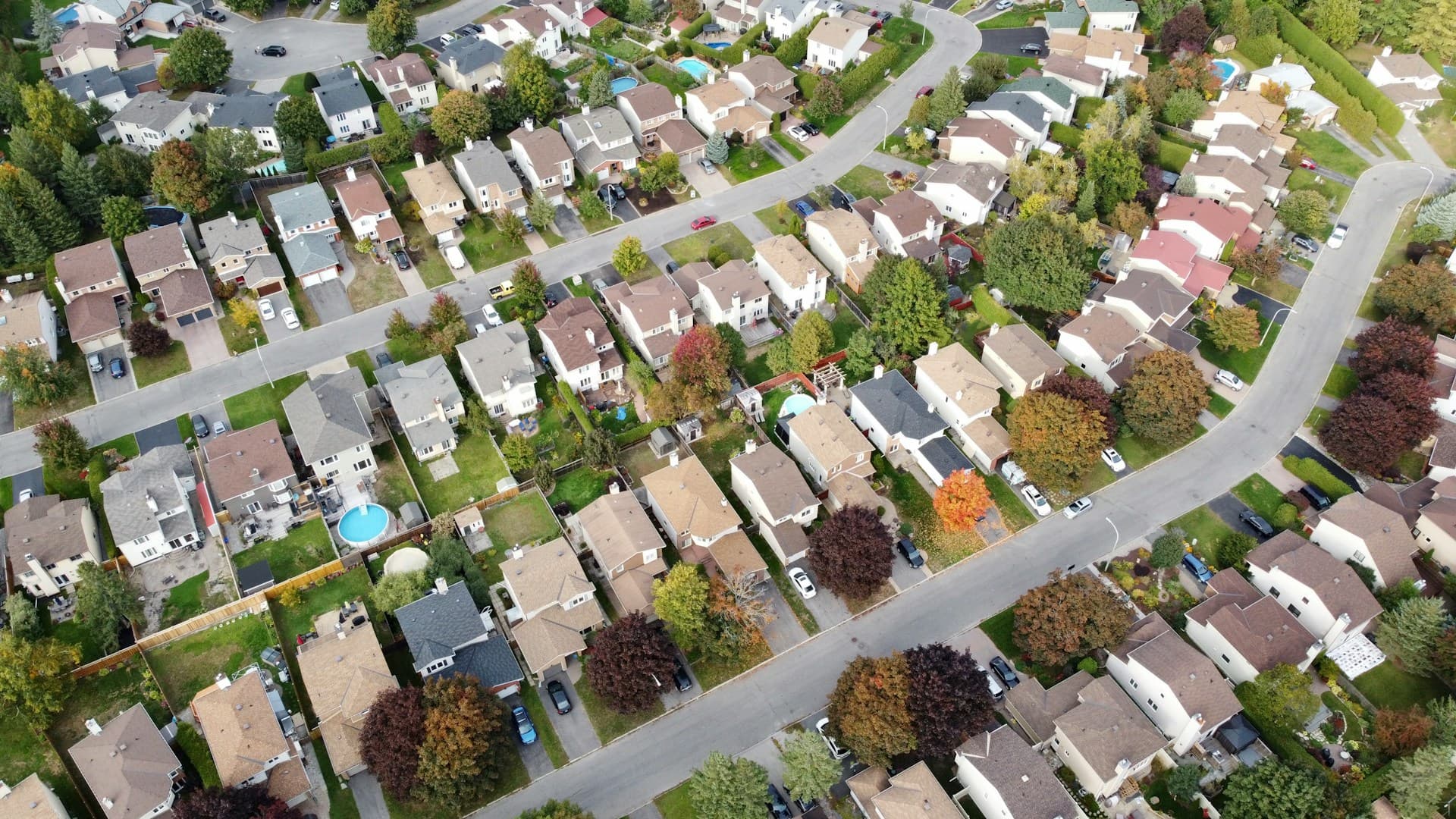
Every depreciation deduction you claim on a rental property reduces your adjusted tax basis, which can increase taxable gain when the property is sold. For residential rental buildings depreciated using the straight-line method, the depreciation-related portion of eligible long-term gain is generally classified as unrecaptured Section 1250 gain, subject to a maximum federal rate of 25%.
Certain accelerated depreciation components may face even higher ordinary income rates. Understanding these exit tax implications is essential for calculating true investment returns, whether you own property directly or through a fractional real estate platform like mogul.
Disclaimer: The information provided in this guide is for educational purposes only and does not constitute financial, tax, or legal advice. Always consult with a licensed professional before making any financial or investment decisions.
Key Takeaways
Unrecaptured Section 1250 gain from standard straight-line real estate depreciation is taxed at a maximum 25% federal rate, while certain cost segregation components may face up to 37% ordinary income rates
Depreciation "allowed or allowable" generally reduces adjusted basis, even when the deduction was not claimed
Combined effective tax burdens can be substantial in high-tax states when adding federal rates, Net Investment Income Tax, and state taxes, though actual liability depends on individual circumstances
An inherited property may receive a basis adjustment that reduces or eliminates certain depreciation-related gains; 1031 exchanges generally defer eligible gain
1031 exchanges may defer recognition of eligible gain but require compliance with strict IRS rules, with treatment depending on property types exchanged
Understanding Rental Property Depreciation: The Basics
What Is Depreciation and Why Does It Matter for Rental Properties?
Depreciation allows rental property owners to deduct a portion of the property's cost each year, reducing taxable income even when the property generates positive cash flow. This tax benefit reflects the theoretical "wear and tear" on a building over time, though in practice most properties appreciate rather than decline in value.
The IRS generally requires the Modified Accelerated Cost Recovery System (MACRS) for depreciation on rental property placed in service after 1986. Under this system, you can only depreciate the building portion of your investment - land is not depreciable because it doesn't wear out.
Key depreciation fundamentals include:
Depreciation period: Residential rental property depreciates over 27.5 years
Commercial property: Non-residential real estate depreciates over 39 years
Straight-line method: Most real estate uses equal annual deductions
Cost basis: Your purchase price plus closing costs, minus land value
For a property with a $500,000 depreciable building value, annual depreciation would be approximately 18,182(500,000 ÷ 27.5 years). Over a 10-year hold, that creates approximately $181,820 in accumulated depreciation, reducing the property's adjusted basis. Depreciation generally begins when a building is available for rent, with a mid-month convention for residential rental property under IRS Publication 527.
Calculating the Cost Basis of Your Rental Property
Your cost basis determines both your annual depreciation deductions and eventual gain calculations. The basis starts with your purchase price and includes:
Acquisition costs: Title insurance, recording fees, legal fees
Improvements: Capital expenditures that add value or extend useful life
Deductions: Accumulated depreciation reduces your adjusted basis
Depreciation reduces adjusted basis under the "allowed or allowable" rule, even if you did not claim the full deduction.
Depreciation Recapture Explained: When and How It Applies
The Mechanics of Depreciation-Related Gain
When you sell a rental property for more than its adjusted basis, the IRS treats part of your gain differently based on how the property was depreciated. This Section 1250 treatment addresses the depreciation adjustments made during ownership.
The depreciation-related gain amount equals the lesser of:
Your total accumulated depreciation, or
Your total gain on the sale
If you sell at a loss relative to your adjusted basis, there is no such gain to recognize. However, a sale below the original purchase price can still generate taxable gain if depreciation has reduced the property's adjusted basis below the sale proceeds.
Illustrative Example: Calculating Gain Components on Sale
Consider this scenario based on common calculation methods:
Original depreciable building basis: $500,000 (excluding land, for simplicity)
Accumulated depreciation over 10 years: $181,820
Adjusted basis: 318,180(500,000 - $181,820)
Sale price: $800,000 (assuming no selling costs)
Total gain: 481,820(800,000 - $318,180)
This gain breaks into two components:
Unrecaptured Section 1250 gain: $181,820 (taxed at up to 25%)
Remaining capital gain: $300,000 (taxed at 15-20% long-term rates)
The tax on the unrecaptured Section 1250 gain portion alone would be approximately 45,455(181,820 × 25%) under the maximum rate, separate from capital gains taxes on the remaining profit.
Depreciation Recapture Rates and Tax Implications
The 25% Maximum Rate on Unrecaptured Section 1250 Gain
For eligible long-term gain, unrecaptured Section 1250 gain generally faces a maximum federal rate of 25%, not a flat 25% rate. Taxpayers in lower brackets may pay a lower rate.
Section 1245 vs. Section 1250: When Rates Can Climb Higher
Properties that have undergone cost segregation studies face different treatment rules. Cost segregation identifies qualifying assets that may use shorter depreciation periods than the building itself. Some components may be classified as Section 1245 property, with depreciation-related gain potentially subject to ordinary income treatment on sale.
The trade-off: Section 1245 property can face taxation at ordinary income rates, not the 25% cap for unrecaptured Section 1250 gain. Actual tax consequences depend on asset classification, depreciation history, recognized gain, and the taxpayer's circumstances.
How Your Income Level Affects Depreciation-Related Taxes
High-income investors may face an additional layer of taxation. The Net Investment Income Tax may apply to eligible investment income for:
Single filers with modified adjusted gross income exceeding $200,000
Married couples filing jointly with income exceeding $250,000
Some taxpayers may owe a 3.8% Net Investment Income Tax on eligible investment income, including certain rental-property sale gains. The tax is calculated on the lesser of net investment income or modified adjusted gross income exceeding the applicable filing-status threshold. It does not automatically apply to the entire sale price.
State taxes can also apply. California taxes taxable gains under its graduated state income tax system, with a maximum marginal rate of 13.3% for qualifying high-income taxpayers. New York reaches 10.9% for high earners. The actual state tax on rental-property dispositions depends on the taxpayer's circumstances and applicable sourcing rules.
Tax Forms for Reporting Rental Property Sales
Property sales require specific IRS reporting:
Form 4797: Sale of Business Property - reports certain gain components
Schedule D: Capital Gains and Losses - reports the capital gain portion
Form 8824: Like-Kind Exchanges - required if using 1031 exchange deferral
Errors on these forms can trigger audits, penalties, and interest charges. Many investors work with CPAs who specialize in real estate transactions to ensure accurate reporting.
Strategies to Avoid or Minimize Depreciation-Related Taxes
Utilizing a 1031 Exchange for Tax Deferral
A 1031 like-kind exchange may defer recognition of eligible gain, including certain depreciation-related gain, by exchanging into qualifying replacement property. Section 1031 allows qualifying exchanges of investment or business real property to defer recognition when applicable requirements are met.
Key potential benefits include:
Deferral of eligible gain: Both unrecaptured Section 1250 gain and other capital gains may be deferred
Continued depreciation: The replacement property follows applicable carried-over and additional-basis depreciation rules
Wealth compounding: Sale proceeds remain invested rather than being reduced by current taxes
However, 1031 exchanges require strict compliance with IRS rules to qualify for deferral. Tax consequences depend on the properties exchanged, the consideration received, and applicable depreciation-recapture rules.
Key Rules and Deadlines for a Successful 1031 Exchange
Deferred exchanges generally follow strict deadlines, subject to limited exceptions:
45-day identification period: Replacement property must be identified in writing within 45 days of closing
180-day completion deadline: In a deferred Section 1031 exchange, replacement property generally must be received by the earlier of 180 days after the relinquished property's transfer or the applicable tax return due date, including extensions
Qualified intermediary: Proceeds must be held by a third party; directly receiving funds can disqualify the exchange
Like-kind requirement: Qualifying U.S. real property is generally like-kind to other U.S. real property held for investment or business use
Properties with cost segregation face additional complexity. If replacement property contains less Section 1245 property than the relinquished property, the difference may trigger immediate ordinary income recognition. The treatment depends on the assets exchanged and the transaction structure.
Other Avenues to Reduce Depreciation-Related Tax Liability
Beyond 1031 exchanges, investors have limited options:
Step-up in basis at death: Under IRC Section 1014, inherited rental property generally receives an adjusted tax basis, often based on its fair market value at death. This can substantially change the gain recognized on a subsequent sale. The treatment of inherited LLC or partnership interests may involve additional basis-adjustment rules. This "swap till you drop" strategy involves using 1031 exchanges throughout life, then passing properties to heirs who may receive adjusted basis.
Section 121 primary residence exclusion: Converting a rental property into a primary residence may allow part of the gain to qualify for the Section 121 home-sale exclusion if the applicable requirements are satisfied. However, the exclusion generally does not cover gain attributable to depreciation allowed or allowable after May 6, 1997. Additional restrictions may apply to periods of nonqualified use.
Installment sales: Spreading gain recognition over multiple years through seller financing. An installment sale may spread recognition of qualifying gain over the years payments are received. Ordinary depreciation recapture generally must be recognized in the sale year, while unrecaptured Section 1250 gain may be recognized under applicable installment-sale rules.
Qualified Opportunity Zones: Qualified Opportunity Funds can offer tax benefits for eligible investments, but the applicable rules depend on when the investment is made. Under the original program, remaining deferred gains generally become recognizable by December 31, 2026. Revised provisions apply to qualifying investments beginning in 2027, including a different deferral framework and holding-period requirements.
Depreciation-Related Gain vs. Capital Gains Tax: A Comparison
The Difference in Tax Rates and Treatment
Unrecaptured Section 1250 gain: Up to 25% on eligible depreciation-related long-term gains.
Section 1245 recapture: Ordinary income tax rates may apply to certain accelerated-depreciation components.
Other long-term capital gain: Generally taxed at 0%, 15%, or 20%, depending on income.
Net Investment Income Tax: An additional 3.8% may apply to qualifying investment gains above the relevant income thresholds.
Impact of Holding Period: Short-Term vs. Long-Term Gains
Holding period influences gain classification and applicable rates. The special unrecaptured Section 1250 gain rate generally concerns eligible long-term gains, while short-term dispositions can follow different rules.
Held less than one year: Remaining capital gain portion taxed at ordinary income rates (up to 37%)
Held more than one year: Remaining capital gain portion receives preferential rates (0%, 15%, or 20%)
For rental properties held longer than one year, eligible remaining gain may receive long-term rates while unrecaptured Section 1250 gain is generally subject to the 25% maximum. Certain Section 1245 components follow different rules.
How Both Tax Categories Interact on Your Rental Property Sale
Using our earlier example with a $481,820 total gain, here's how the calculation might work under maximum rates:
Unrecaptured Section 1250 gain calculation: $181,820 × 25% = $45,455
Remaining long-term capital gains calculation (assuming 20% bracket): $300,000 × 20% = $60,000
Net Investment Income Tax (if applicable to high-income investor): $481,820 × 3.8% = $18,309
Total hypothetical federal tax under these maximum-rate assumptions: $123,764, which represents approximately 25.7% of the $481,820 taxable gain, or approximately 15.5% of the $800,000 gross sale price. Actual tax liability depends on income, deductions, applicable tax rates, and whether NIIT applies.
State income tax treatment of rental-property gains varies by jurisdiction. States such as Florida and Texas do not generally impose an individual state income tax, while investors residing in other states may have additional obligations based on residence and income-sourcing rules.
IRS Rules for Rental Property: Depreciation and Beyond
Understanding Passive Activity Loss Rules
Rental property income and losses typically qualify as "passive activity" under IRC Section 469. This classification creates important implications:
Rental real estate losses are generally subject to passive activity limitations, although exceptions may apply
Unused passive losses can carry forward
Certain qualifying dispositions of an entire activity may permit previously suspended losses to become deductible
Real estate professionals may qualify for non-passive treatment
When you sell, previously suspended passive losses may become deductible under applicable rules, potentially offsetting some of your gain and related taxes.
Maintaining Accurate Records for Tax Compliance
Proper documentation supports your tax positions and protects against audits:
Purchase records: Settlement statements, closing disclosures
Improvement receipts: Invoices, contractor agreements, permits
Depreciation schedules: Annual calculations, placed-in-service dates
Expense records: Repairs, maintenance, property management fees
Fractional ownership through platforms like mogul can simplify access to property-level records and applicable tax documents. Potential depreciation deductions depend on the investment structure and each investor's tax circumstances.
Investment Calculators for Rental Property Analysis
mogul's Investment Property Calculator and Real Estate Calculator model returns, financing, and holding-period assumptions. Its Rental Property Calculator and Airbnb Calculator estimate rental scenarios. These tools are not personal tax or depreciation-recapture calculators.
Why mogul Handles Depreciation Complexity for You
Direct property ownership creates a significant administrative burden around depreciation tracking, tax reporting, and exit planning. mogul's fractional real estate platform simplifies property-level reporting through an investment-club structure developed by former Goldman Sachs real estate professionals.
What sets mogul apart:
Streamlined property-level tax reporting: mogul's property-specific LLC structure provides investors with access to financial information and applicable Schedule K-1 documentation. Partnership-taxed LLCs may allocate income, depreciation deductions, and gains, including unrecaptured Section 1250 gain when applicable. Individual tax outcomes depend on the investment structure and each investor's circumstances.
Institutional-grade underwriting: Less than 1% of properties reviewed pass mogul's diligence process. The research team uses proprietary underwriting models and market analysis to identify properties with strong investment potential, applying institutional-level expertise to individual real estate opportunities.
Transparent exit planning: mogul's target hold period of 3–10 years provides a framework for property dispositions. When properties are sold, the platform coordinates proceeds distributions and applicable tax reporting, with investors receiving documentation relevant to their ownership interests.
Monthly income: mogul generally distributes available net rental income to members monthly, depending on property performance and applicable investment terms. Investors may also benefit from long-term property appreciation.
First-year loss protection: mogul offers up to $10,000 in protection for qualifying new-member investments made within their first seven days. Eligible losses are measured after one year, subject to applicable promotion terms.
mogul reported $110 million in assets as of June 1, 2026, and more than 50,000 users as of September 28, 2026. Its target IRR range was 12%–20% as of September 28, 2026, backed by an investment team with more than $10 billion in institutional real estate experience.
Disclaimer: The information provided in this guide is for educational purposes only and does not constitute financial, tax, or legal advice. Always consult with a licensed professional before making any financial or investment decisions.
Frequently Asked Questions
What happens if I never claimed depreciation deductions on my rental property?
The IRS generally reduces your property's adjusted basis by depreciation "allowed or allowable," even if you never claimed the deductions. You may recover missed deductions through amended returns or an accounting-method change using Form 3115, depending on IRS rules and your circumstances.
Can I do a 1031 exchange with fractional ownership shares?
LLC membership interests generally do not qualify for 1031 exchanges because they represent ownership in an entity rather than direct ownership of real property. However, certain tenants-in-common (TIC) or Delaware Statutory Trust (DST) arrangements may qualify under applicable IRS rules.
How does depreciation work differently for commercial vs. residential property?
Nonresidential real property generally depreciates over 39 years, compared with 27.5 years for residential rentals. Both may generate unrecaptured Section 1250 gain subject to a maximum 25% federal rate, while qualifying assets identified through cost segregation may receive different depreciation and tax treatment.
Does inherited rental property still face depreciation-related gain recognition?
Inherited rental property generally receives an adjusted basis under Section 1014, often reflecting its fair market value at death. This adjustment may eliminate previously accumulated depreciation-related gain on directly inherited property, although LLC and partnership interests can involve additional rules.
How does the One Big Beautiful Bill Act affect depreciation planning for rental properties?
The One Big Beautiful Bill Act restored 100% first-year bonus depreciation for qualifying property acquired and placed in service after January 19, 2025. Certain components identified through cost segregation may qualify, while residential rental buildings generally retain their 27.5-year depreciation period. Accelerated deductions can affect future taxable gains and depreciation recapture.